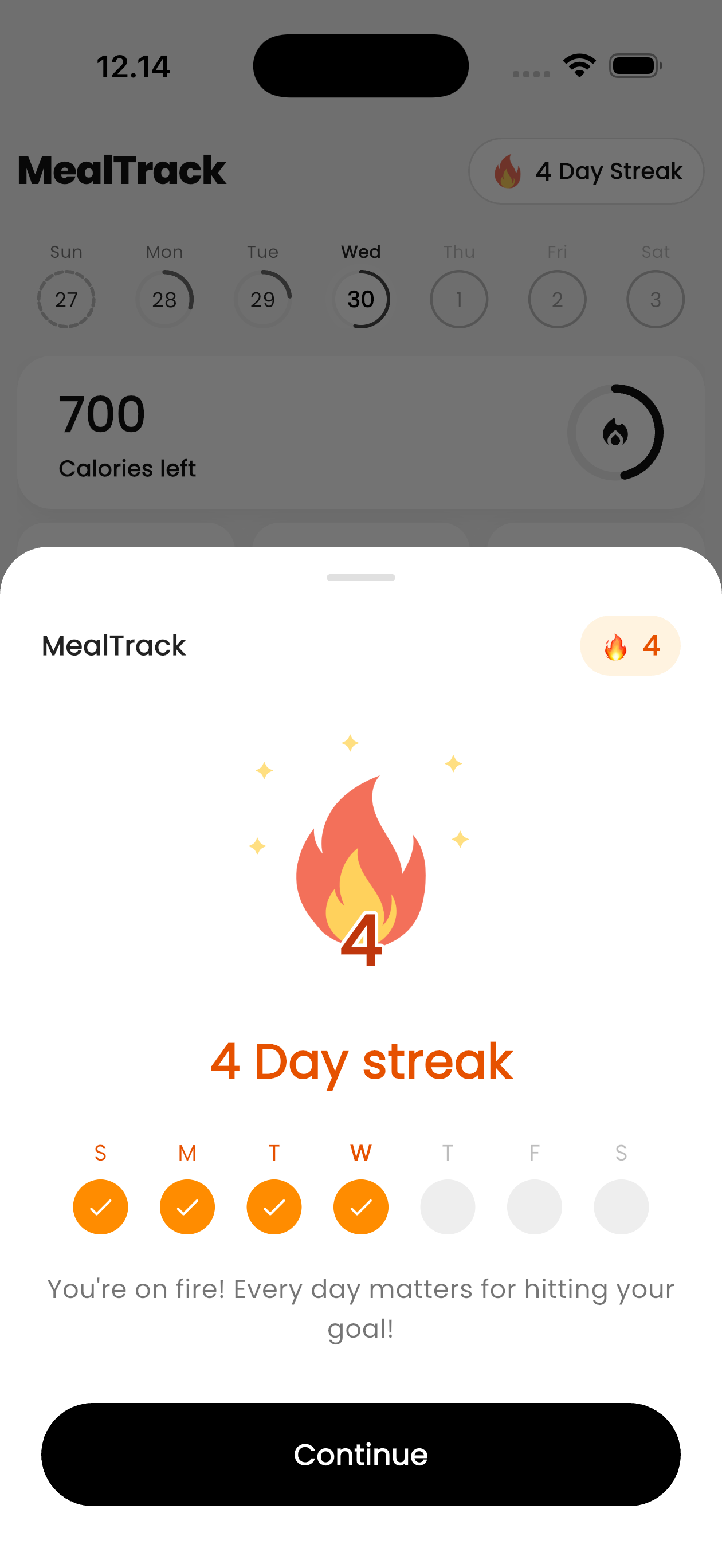
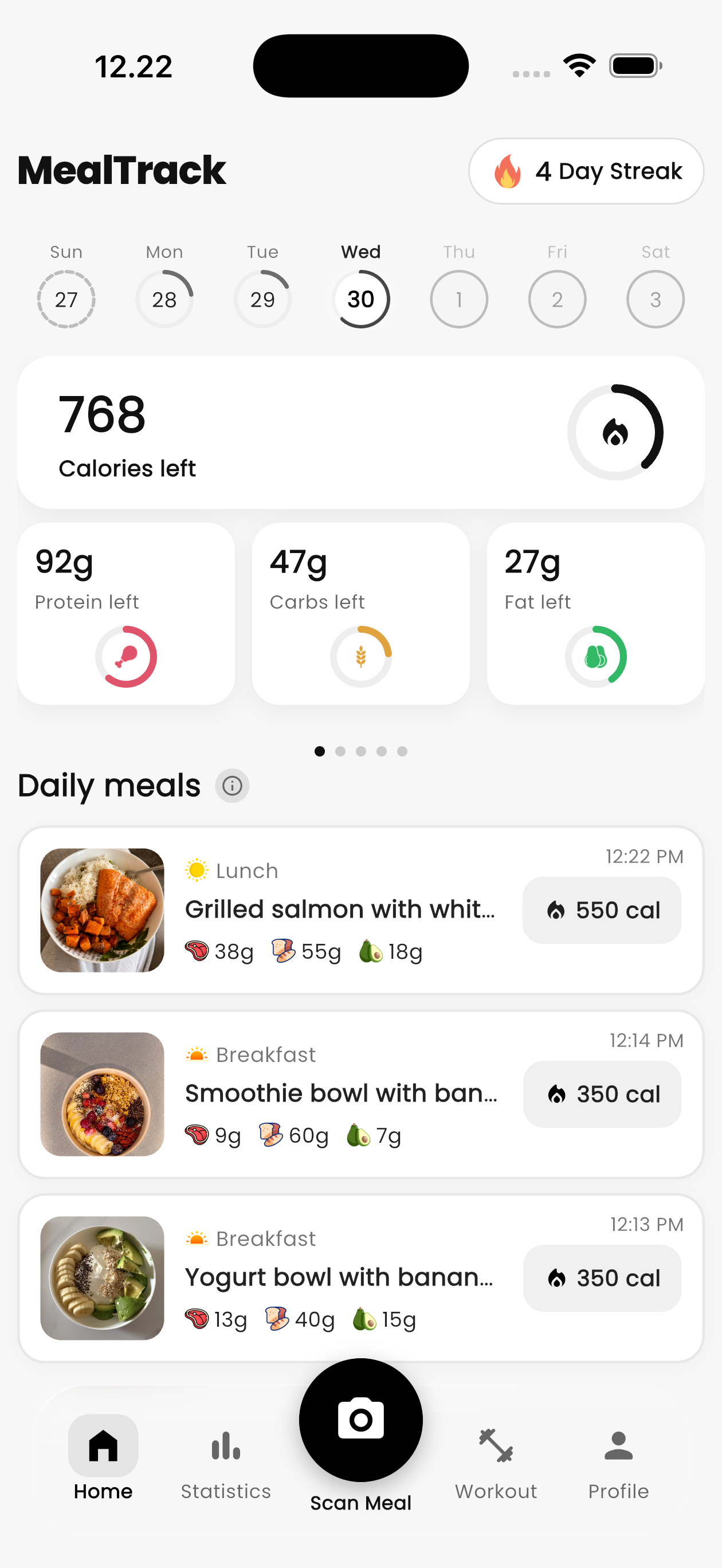
To stick to calorie tracking, make logging take seconds and make a missed day visible. Log each meal as you eat it (a photo or a voice note is enough), keep a daily streak, put your calories left on your home screen with a widget, and judge progress by weekly averages, not single days. Aim for consistent, not perfect: a rough log every day beats a perfect log twice a week.
Why people quit
Food logging fails for predictable reasons. It's slow (searching a database for every ingredient), it feels like failure (one bad day and the app looks like a report card), and it's easy to forget (you meant to log lunch later). Each habit below targets one of these.
9 habits that make tracking stick
- Log as you eat, not laterMemory is bad at portions and worse at snacks. Logging at the table takes less time than reconstructing the day at night.
- Use the fastest method for each mealPhoto for plates, barcode for packages, voice when your hands are full. The best method is the one you'll actually use.
- Keep a streakA daily streak turns logging into something you don't want to break. Logging anything, even a rough estimate, keeps it alive.
- Put your numbers on the home screenA widget showing calories left means you see your budget dozens of times a day without opening the app.
- Set a reminder for the meal you forgetMost people have one, usually lunch or the evening snack. One well-timed notification fixes it.
- Repeat breakfasts and lunchesSimilar weekday meals become quick logs and free your attention for dinner.
- Log the bad days tooThe days you overeat teach you the most. Log them, then move on.
- Judge by the weekLook at weekly average calories and weekly average weight. Single days are noise.
- Plan for 80%, not 100%Hitting your target five or six days a week is enough to make progress. Consistency is the goal, not perfection.
Your first two weeks
| Days | Focus |
|---|---|
| 1–3 | Just log everything. Don't change what you eat yet: learn where your calories come from. |
| 4–7 | Find the calorie sources you didn't expect (drinks, oils, snacks) and adjust one of them. |
| 8–14 | Hit your target 5 days out of 7. Compare your weekly average weight at the end of week 2. |
Do you have to track forever?
No. Many people track closely for a few months to learn portions and calorie density, then switch to tracking a few days a week, or only when their weight trend changes. The skill stays with you.
If tracking starts to feel stressful or obsessive, take a break and talk to a health professional. The goal is a healthier relationship with food, not a perfect spreadsheet.
Save this guide
The whole guide as a PDF, to read offline or print. It ends with this one-page cheat sheet: every key number on one page, for the fridge or your phone.
 MealTrackCheat sheet
6 habits that keep you logging after week 2
- 1Log as you eatNot later, not from memory.
- 2Fastest method winsPhoto for plates, barcode for packages, voice on the go.
- 3Keep the streakA rough log still counts.
- 4Home-screen widgetCalories left, visible all day.
- 5Log the bad daysThen move on at the next meal.
- 6Judge by the weekWeekly averages, not single days.
 Scan to get the app
Frequently asked questions
How long does it take to make calorie tracking a habit?
It varies a lot by person. A well-known study on habit formation found new habits took anywhere from 18 to 254 days to become automatic, with a median of about 66 days. Making logging fast and tying it to something you already do, like every meal, helps it stick sooner.
Is it okay to miss a day of tracking?
Yes. Missing a single day has little effect on building a habit; what matters is getting back to it the next day. Log what you remember and keep going.
What's the fastest way to log food?
Photo logging for plated meals and barcode scanning for packaged food are the fastest for most people. Voice logging is quickest when you're on the move.
Should I log on weekends?
Yes. Weekends are where many deficits disappear. Even rough photo logs on Saturday and Sunday keep your weekly average honest.
This guide is general information, not medical advice. Calorie and nutrient figures are typical values and estimates. Talk to a doctor or registered dietitian before making big changes to your diet, especially if you are pregnant, under 18, or managing a medical condition.