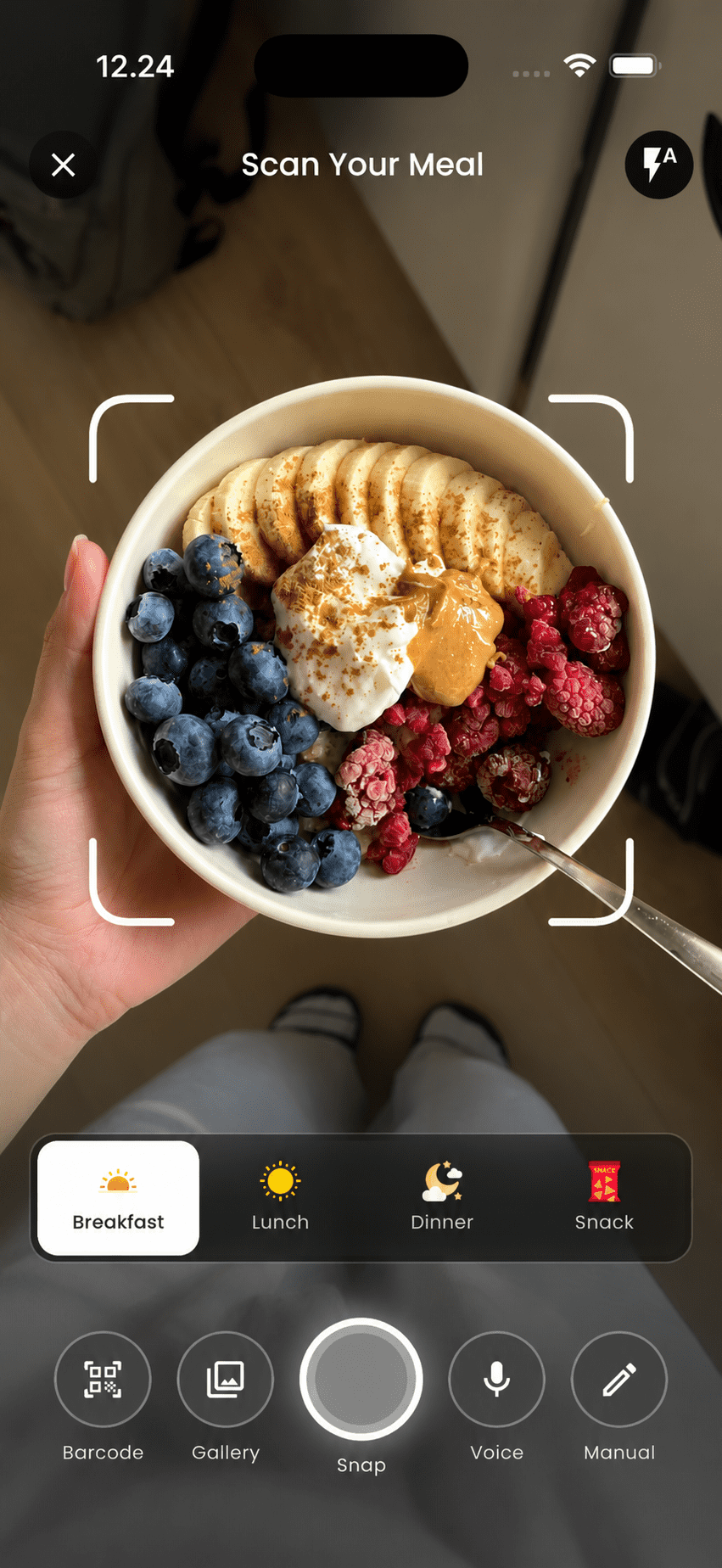
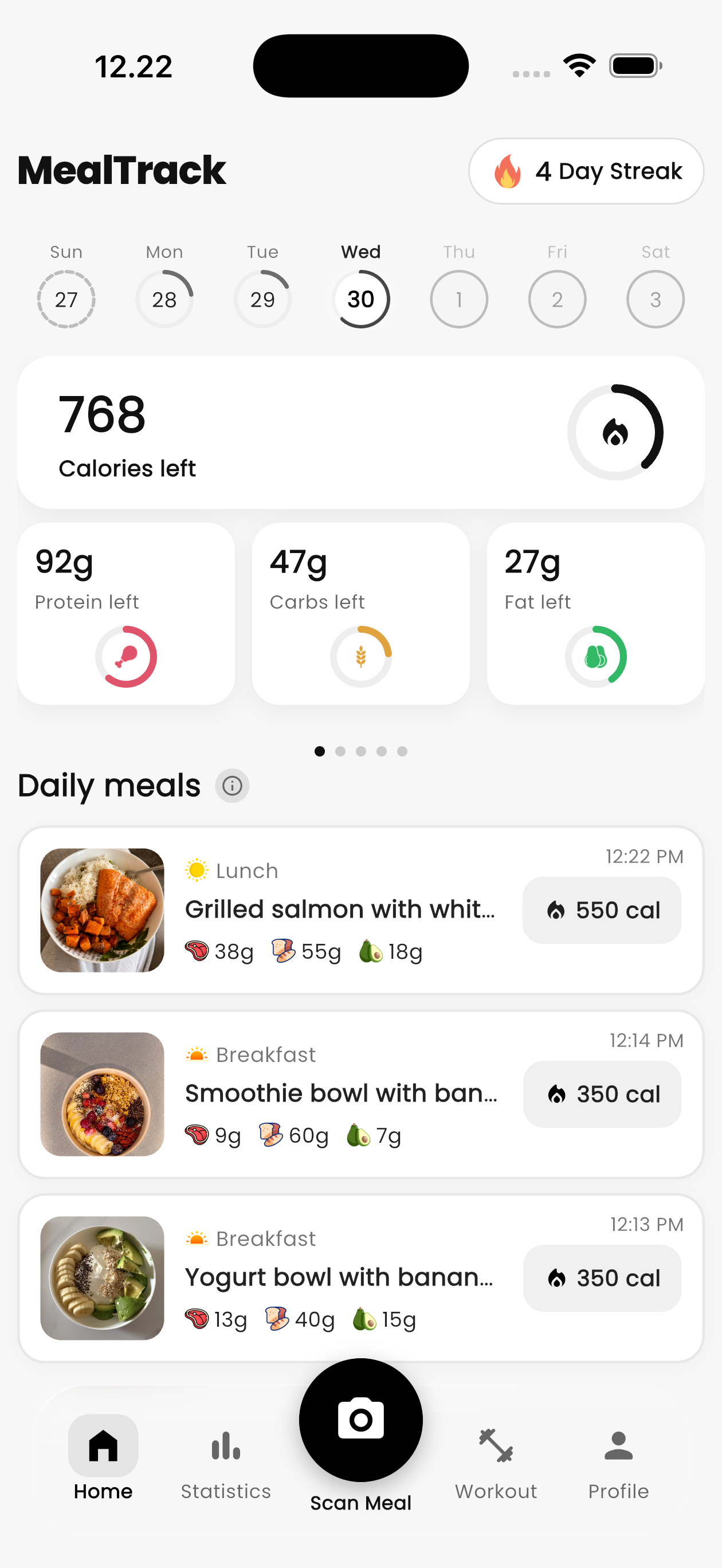
To track calories when eating out, check the menu or the restaurant's nutrition info ahead of time if it's available, photograph your plate before eating so an AI tracker can estimate it, then add the extras restaurants use generously: oil, butter, dressings, sauces and drinks. When in doubt, round portions up. One estimated restaurant meal won't break your progress; skipping the log will.
Before you go
- Look up the menu. Many chains publish calories online or print them on the menu. Pick your meal while you're not hungry.
- Save room in your day. Keep breakfast and lunch lighter and protein-heavy so dinner fits your budget.
- Decide on drinks in advance. Two cocktails or a couple of beers can add 300–500 kcal.
At the table: log it in 30 seconds
- Snap the plate before the first biteA quick photo captures the full portion. MealTrack identifies the foods and estimates calories and macros.
- Add what you can't seeRestaurant kitchens are generous with oil and butter. Add a tablespoon of oil to sautéed or fried dishes, and log sauces and dressings separately.
- Use voice when a photo is awkwardOn a date or at a work dinner? Say it instead: "grilled salmon, mashed potatoes and a glass of red wine."
- Log drinks and dessert as they arriveThey're the most forgotten entries of any meal out.
Estimate portions with your hand
No scale at the table? Your hand is a portion guide you always have with you:
| Hand guide | Roughly equals | Use it for |
|---|---|---|
| Palm (size and thickness) | About 100 g cooked | Meat, fish, tofu |
| Fist | 1 cup | Rice, pasta, cereal |
| Cupped hand | About ½ cup | Fries, snacks, nuts |
| Thumb | 1 tablespoon | Oil, nut butter, dressing |
| Thumb tip | 1 teaspoon | Butter, mayo |
After the meal: keep the week on track
One big meal doesn't undo a week of consistent eating. Log it honestly, then go back to your normal targets at the next meal. No skipping meals to compensate.
Think in weeks, not days. If you're 600 kcal over today, eating 100–150 kcal less over the next few days evens it out without making you miserable. Your weekly average weight will tell you if it worked.
Save this guide
The whole guide as a PDF, to read offline or print. It ends with this one-page cheat sheet: every key number on one page, for the fridge or your phone.
 MealTrackCheat sheet
Restaurant calories without the guesswork
- 1Check the menu firstChoose before you're hungry.
- 2Snap before eatingA photo log takes seconds.
- 3Add oil and butter1 tablespoon ≈ 100–120 kcal.
- 4Sauce on the sideA small pot of dressing ≈ 250 kcal.
- 5Log the drinksBeer, wine, cocktails: 150–300 kcal each.
- 6Hand portionsPalm = protein · fist = 1 cup · thumb = 1 tbsp.
 Scan to get the app
Frequently asked questions
How do I count calories at a restaurant without nutrition info?
Take a photo before eating and let an AI tracker estimate it, then add cooking oil and sauces separately. Compare portions with your hand (a palm of meat, a fist of rice) and round up rather than down.
How many calories are in a typical restaurant meal?
It varies widely, but it's often more than people expect. A study of popular meals at US restaurants found an average of about 1,200 kcal per meal, before drinks and dessert.
Should I skip logging when I eat out?
No. An estimate beats a blank. Unlogged meals are one of the most common reasons a calorie deficit stops working, and even a rough photo log keeps your weekly picture honest.
What are the lowest-calorie options when eating out?
Grilled or roasted protein, vegetables, broth-based soups and dishes with sauce on the side. Swap fries for salad or vegetables, and drink water, sparkling water or a zero-sugar soda.
This guide is general information, not medical advice. Calorie and nutrient figures are typical values and estimates. Talk to a doctor or registered dietitian before making big changes to your diet, especially if you are pregnant, under 18, or managing a medical condition.