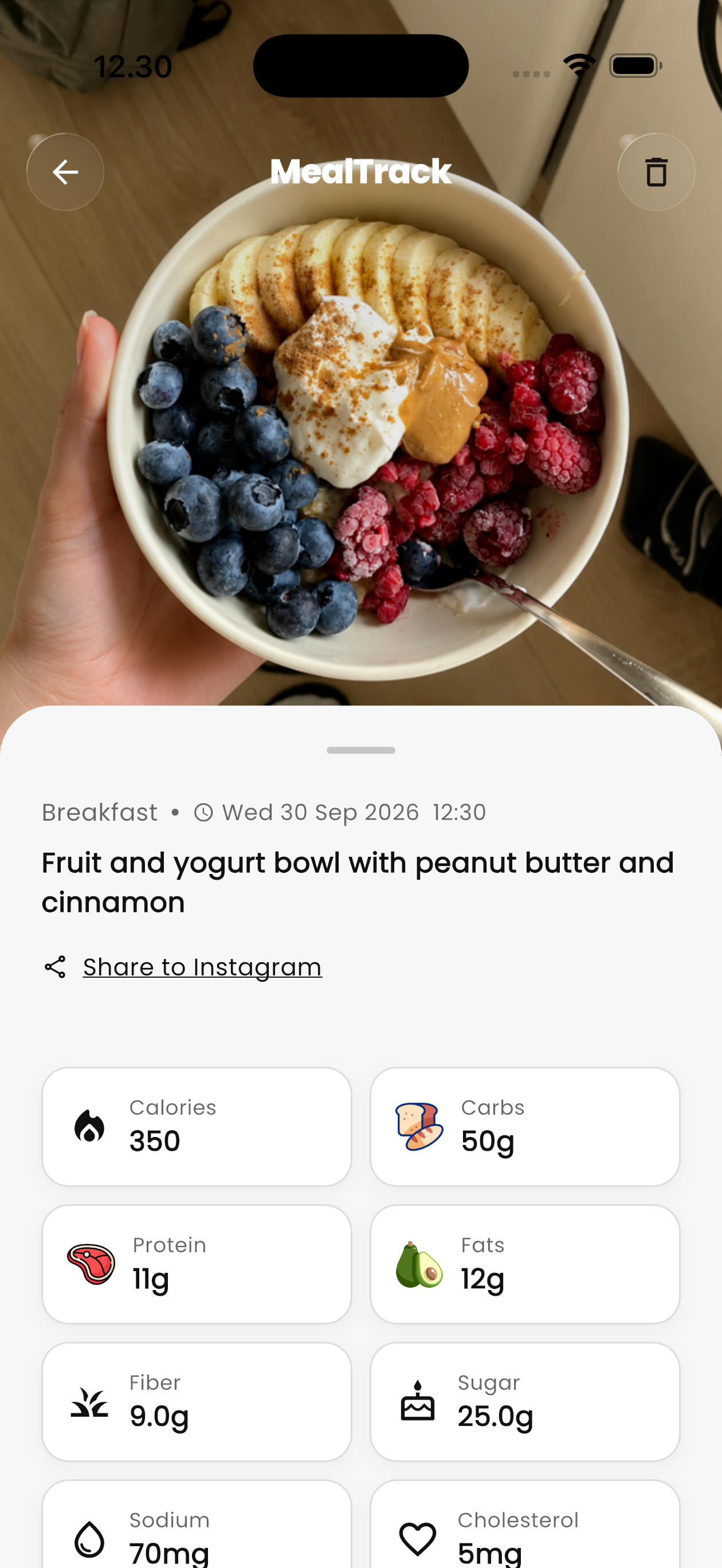
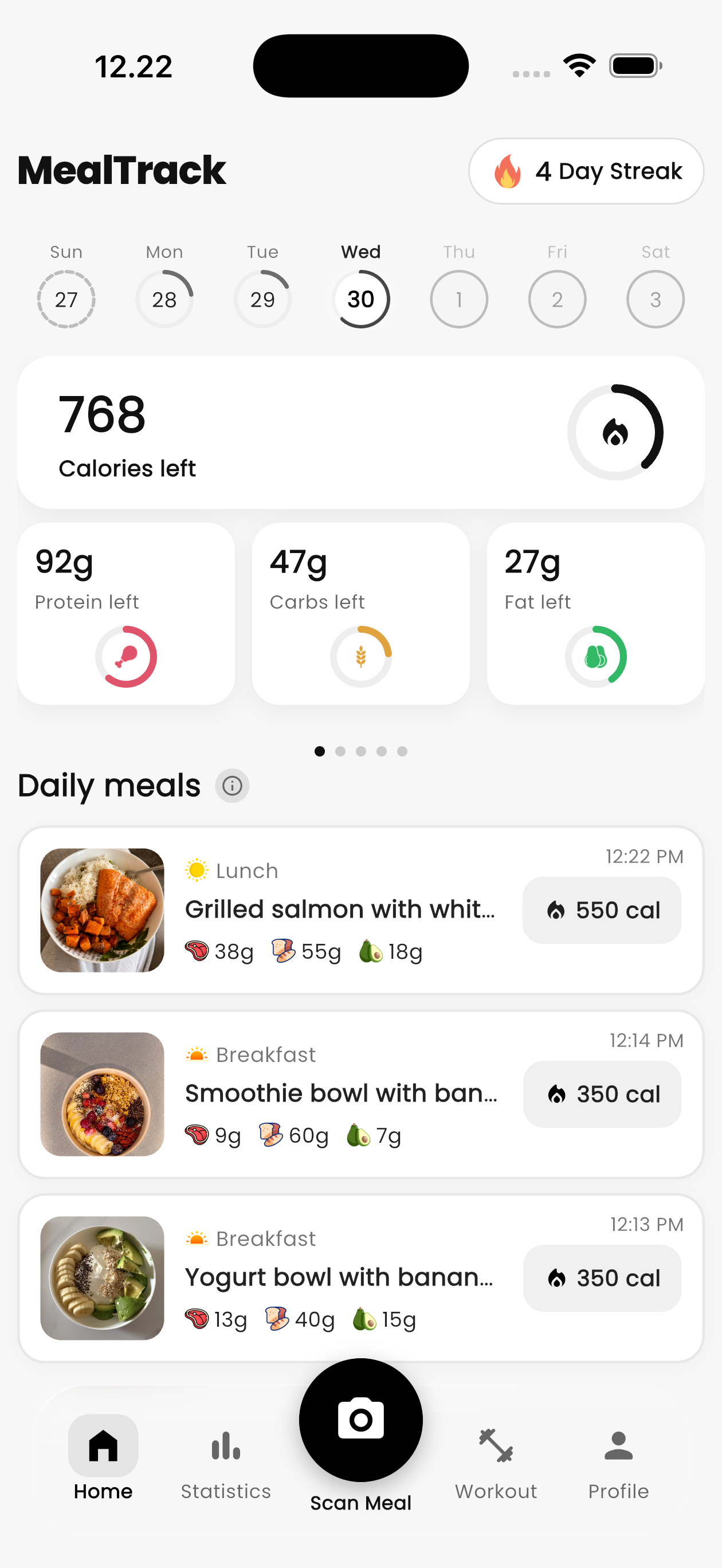
To track macros, set a daily calorie target, then split it into grams of protein, carbohydrates and fat. Set protein first (about 1.6 g per kg of body weight if you train), give fat 25–30% of calories, and fill the rest with carbs. Protein and carbs have 4 kcal per gram and fat has 9. Log every meal in an app that shows macros, and aim to land within about 10 g of each target most days.
What macros are
Calories tell you how much you eat. Macros tell you what it's made of. Two days with the same 1,800 kcal can look very different: one high in protein that keeps you full, one mostly snacks that leave you hungry by 4 pm.
| Macro | Calories per gram | Main job |
|---|---|---|
| Protein | 4 kcal | Builds and repairs muscle, keeps you full |
| Carbohydrates | 4 kcal | Fuels your brain and your training |
| Fat | 9 kcal | Hormones, vitamin absorption, flavor |
| Alcohol (not a macro you need) | 7 kcal | Energy with no nutrients |
How to set your macro targets
- Start with caloriesUse your maintenance calories, minus a deficit if you want to lose weight. Our calorie deficit guide walks through it.
- Set protein firstMultiply your body weight in kg by 1.6 (or pounds by 0.7). This is the macro most people undereat.
- Set fatGive fat 25–30% of your calories, then divide by 9 to get grams. Don't go much below 20%.
- Fill the rest with carbsSubtract the protein and fat calories from your total and divide what's left by 4.
Example: 1,800 kcal for a 75 kg person
| Macro | Calculation | Daily target |
|---|---|---|
| Protein | 75 kg × 1.6 = 120 g → 480 kcal | 120 g |
| Fat | 1,800 × 30% = 540 kcal ÷ 9 | 60 g |
| Carbs | 1,800 − 480 − 540 = 780 kcal ÷ 4 | 195 g |
That works out to about 27% of calories from protein, 30% from fat and 43% from carbs.
Typical targets by goal
| Goal | Protein | Fat | Carbs |
|---|---|---|---|
| Lose fat | 1.6–2.2 g/kg | 25–30% | The rest |
| Maintain | 1.4–1.8 g/kg | 25–35% | The rest |
| Build muscle | 1.6–2.2 g/kg | 20–30% | The rest (usually more) |
These sit close to the ranges health authorities recommend for adults: 10–35% of calories from protein, 20–35% from fat and 45–65% from carbs. Low-carb and keto diets go outside those ranges on purpose. They work if you can sustain them, but they aren't required for fat loss.
How to hit your macros without obsessing
- Build meals around protein. Pick it first (chicken, fish, eggs, Greek yogurt, tofu, beans), then add carbs and vegetables.
- Aim for a range, not an exact number. Within about 10 g of protein and carbs, and 5 g of fat, is a great day.
- Repeat a few go-to meals. Familiar breakfasts and lunches make the rest of the day easy to plan.
- Check what's left before dinner. It's easier to close a protein gap at 6 pm than at 10 pm.
- Short on time? Track two numbers. Calories and protein matter most. Carbs and fat can flex day to day.
Save this guide
The whole guide as a PDF, to read offline or print. It ends with this one-page cheat sheet: every key number on one page, for the fridge or your phone.
 MealTrackCheat sheet
Set protein, carb and fat targets in 4 steps
- 1Start with caloriesMaintenance calories, minus your deficit.
- 2Protein first1.6 g × body weight in kg, or 0.7 g × pounds.
- 3Fat: 25–30%Of your calories, then ÷ 9 for grams.
- 4Carbs: the restRemaining calories ÷ 4 for grams.
- 5Hit a range±10 g protein and carbs, ±5 g fat is a win.
- 6Protein every mealPick it first, then add carbs and vegetables.
 Scan to get the app
Frequently asked questions
What should my macros be to lose weight?
Keep a calorie deficit and set protein high, about 1.6–2.2 g per kg of body weight, with fat at 25–30% of calories and carbs filling the rest. Total calories drive weight loss; protein helps you keep muscle and stay full.
Is tracking macros better than counting calories?
Macro tracking includes calorie counting, plus a breakdown of where the calories come from. If your only goal is weight loss, calories and protein are enough for most people.
Do I need to hit my macros exactly?
No. Landing within about 10 g on protein and carbs and 5 g on fat is close enough. Consistency over the week matters more than perfection on any single day.
What is IIFYM?
IIFYM stands for "if it fits your macros": a flexible approach where any food is fine as long as your daily calories and macros land on target. It works best when most of your food is nutritious and treats fit in around it.
This guide is general information, not medical advice. Calorie and nutrient figures are typical values and estimates. Talk to a doctor or registered dietitian before making big changes to your diet, especially if you are pregnant, under 18, or managing a medical condition.