Junk food doesn't cause acne on its own. Hormones, genetics, oil production and clogged pores do most of the work. But diet can make breakouts worse for some people: in small controlled trials, a low-glycemic diet reduced acne over 10–12 weeks, and large studies link sugary drinks and milk with more acne. The evidence against chocolate and greasy food on its own is weaker. The practical move is to check what you actually eat: log your meals for two weeks, look at each meal's health score, swap the low scorers you eat most often, and give your skin about 12 weeks before you judge the result.
Does junk food cause acne?
Acne starts inside a pore. Skin oil (sebum) and dead skin cells block the follicle, bacteria that normally live on the skin multiply in the blocked pore, and the area gets inflamed. The biggest drivers are hormones (androgens, which rise sharply in puberty) and genetics. That's why plenty of teenagers break out whatever they eat, and plenty of people live on fast food with clear skin.
Diet is more like a volume knob. Foods with a high glycemic load, like white bread, fries, sugary cereal and soda, raise blood sugar and insulin quickly. Insulin and a related hormone, IGF-1, can push the skin to make more oil and more of the cells that clog pores. So junk food doesn't create acne from nothing, but for some people it can turn it up.
Which foods are linked to acne
Not all "junk food" is equal here. This is roughly where the research stands:
| Food or drink | What studies found | Evidence |
|---|---|---|
| High-glycemic foods (white bread, fries, sugary cereal, pastries) | Low-glycemic diets reduced acne in small 10–12 week trials | Moderate |
| Sugary drinks (soda, sweet tea, energy drinks) | Linked to more acne in large observational studies | Moderate |
| Milk, especially skim | Linked to more acne; yogurt and cheese show no clear link | Moderate |
| Whey protein shakes | Breakouts reported in small case series | Limited |
| Chocolate | Small, mixed studies; hard to separate from the sugar | Weak |
| Greasy and fried food | Little direct evidence on its own | Weak |
How to check if your meals are actually healthy
Most people can't say what they ate four days ago, let alone whether it was good for them. A two-week meal audit fixes that:
- Log everything for two weeksIn MealTrack, snap each plate before you eat, scan barcodes for packaged snacks, and log drinks by voice. Count the soda and the sweet coffee: drinks are often the day's biggest source of sugar.
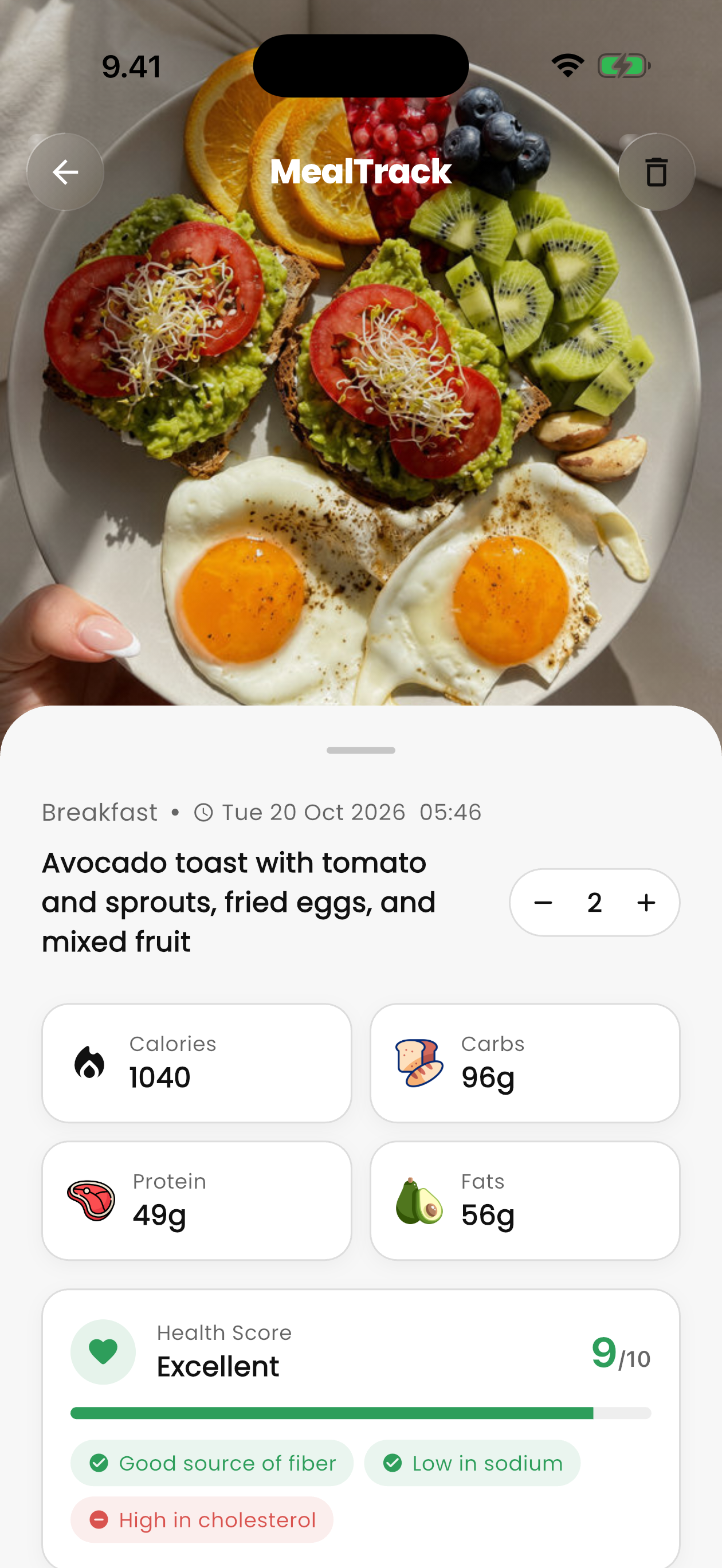
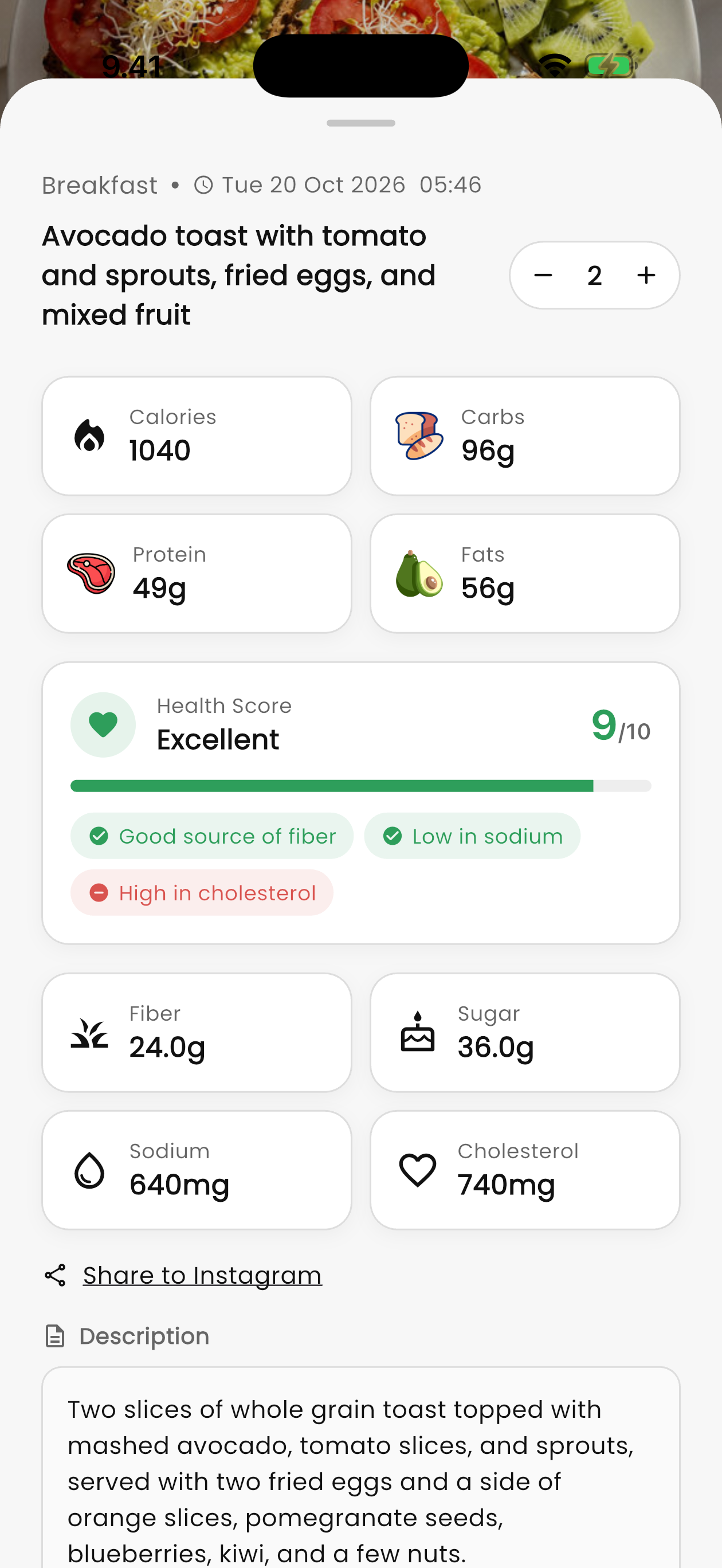
- Open each meal's Health ScoreEvery logged meal gets a score from 1 to 10 plus the main reasons behind it, like "Mostly refined carbs" or "Good source of protein". The score rates food quality (cooking method, processing, sugar, fiber and protein), not portion size.
- Fix anything the AI misreadIf a dish is wrong, tap Fix with AI and describe it, for example "this is a chicken burrito, not beef". The nutrition and the score are recalculated.
- Find your repeat offendersScroll back through the two weeks. Meals that score 4 or lower more than a couple of times a week are your swap list. For most people it's the same two or three things.
- Swap one thing at a timeStart with drinks, then the low-scoring meal you eat most often. One change a week is easier to keep than a full diet overhaul.
New to photo logging? The photo calorie guide covers the habits that make AI estimates more accurate.
What the Health Score means
| Score | What it usually means |
|---|---|
| 9–10 | Whole, minimally processed food: lean protein, vegetables, fiber, little added sugar |
| 7–8 | Mostly nutritious with one drawback, like white rice, cooking oil or a salty sauce |
| 5–6 | Mixed: real nutrition, but noticeably fried, sugary, processed or salty |
| 3–4 | Mostly refined carbs, fried food, sugary drinks or processed meat |
| 1–2 | Ultra-processed, deep fried, candy or soda, with little nutritional value |
Skin-friendly swaps for common junk food
| Instead of | Try | Why |
|---|---|---|
| Regular soda (330 ml can) | Sparkling water or a zero-sugar soda | Skips about 35 g of sugar |
| Burger or burrito with fries | The same main with a salad or beans on the side | More fiber, slower blood sugar rise |
| Sugary breakfast cereal | Oats with nuts and berries | Lower glycemic load, more fiber |
| White bread or rice at every meal | Wholegrain bread, brown rice, or half and half | Digests more slowly |
| Candy or pastries as a snack | Fruit with a handful of nuts, or yogurt | Less added sugar, more protein |
| Several glasses of milk a day | Water; keep yogurt and cheese if you like them | Milk has the clearest dairy link |
Diet helps, treatment works
Better food is an add-on, not a cure. If your acne is painful, leaves dark marks or scars, or is getting you down, see a doctor or dermatologist. Effective treatments exist, and starting early helps prevent scarring.
- Give changes about 12 weeks. That's how long the diet trials ran, and existing spots take weeks to heal either way.
- Take a selfie once a week in the same light. Day-to-day skin changes are hard to judge from memory.
- Don't cut out whole food groups or eat too little to clear your skin, especially while you're still growing.
Save this guide
The whole guide as a PDF, to read offline or print. It ends with this one-page cheat sheet: every key number on one page, for the fridge or your phone.
 MealTrackCheat sheet
Find the foods worth swapping in two weeks
- 1Log everything, 2 weeksMeals, snacks and drinks. Photo, barcode or voice.
- 2Read the Health Score9–10 whole food · 5–6 mixed 1–4 fried, sugary, refined
- 3Find repeat offendersMeals scoring 4 or lower more than twice a week.
- 4Swap drinks firstSoda and sweet coffee → water, sparkling or zero-sugar.
- 5Lower the glycemic loadWhole grains, beans and veg. Protein with every carb.
- 6Judge at 12 weeksWeekly selfie, same light. Painful or scarring acne? See a doctor.
 Scan to get the app
Frequently asked questions
Does junk food cause acne?
Not on its own. Acne is driven mainly by hormones, genetics, oil production and clogged pores. But high-glycemic junk food and sugary drinks can make it worse for some people, and in small trials a low-glycemic diet reduced acne over 10–12 weeks.
How long after changing my diet will my skin improve?
Give it about 10–12 weeks. That's how long diet trials ran before they showed a difference, and existing breakouts take weeks to heal regardless of what you eat.
Does greasy food cause acne?
There's little evidence that greasy food on its own causes acne. Fast food usually comes with white buns, fries and soda, which are high-glycemic, so those may matter more than the grease.
Is chocolate bad for acne?
The evidence is mixed. A few small studies found more breakouts after eating chocolate, but most chocolate is also high in sugar, so it's hard to tell which part matters. If you suspect it, track it for a few weeks and watch for a pattern.
How can I tell if a meal is healthy?
Look at what it's made of: whole or processed food, how it's cooked, how much protein and fiber it has, and how much added sugar and salt. In MealTrack, every logged meal gets a 1–10 Health Score with the main reasons, so you can see this at a glance.
This guide is general information, not medical advice. Calorie and nutrient figures are typical values and estimates. Talk to a doctor or registered dietitian before making big changes to your diet, especially if you are pregnant, under 18, or managing a medical condition.